World & Cosmology
The world was never finished. The ones who came before, the ones who built the cities of glass and steel, they were writing a story, a great and complex blueprint for what reality was supposed to be. They wrote it with atoms and ideas, with physics and promises. We call this story the Memorum, the proto-script that tells a stone to be heavy and water to be wet. But the story was left incomplete, and then the Great Blast came. It was not just a fire that burned the world; it was a cataclysm that tore the pages from the book. It ripped holes in the script, leaving vast sections blank.
Now, we live in the silence between the words. The fundamental law of our time is this: to exist is to be remembered. A thing holds its form only so long as it, or we, remember its purpose. A hammer stays a hammer because it remembers the feeling of striking a nail, and because the hand that holds it remembers the act of building. This is the quiet war we all fight, the constant, thankless labor of holding the world together by the sheer force of our belief in it.
The enemy is not a man or an army. It is the blank page. We call it Oblivion, an aggressive, hungry nothingness that seeps into the world where the script is torn. It is the Unraveling. It is not decay, not the slow, honest work of rust and time. It is an unmaking. A wall that is forgotten does not crumble; it forgets it is a wall. Its concrete forgets its strength, its rebar forgets its tension, and it dissolves into a fine, sterile dust. A man who forgets his name, his purpose, his people—he too can be unmade. This is the great and terrible physics of our age. Hope is not a feeling; it is the act of remembering, of telling the story of the world to itself, over and over, so that it does not forget how to exist.
Core Systems & Institutions
Technology & Artifice
In this world, a machine is a prayer against the void. Technology is not about innovation; it is about preservation. The best tools are the old tools, the ones with a century of purpose soaked into their steel, their memories strong and stubborn. A pre-Blast diesel engine is a holy thing, not for its complexity, but for its deep, unwavering memory of combustion. We do not invent. We listen. We repair. The act of turning a wrench, of cleaning a gear, of reciting a schematic—this is not just maintenance. It is a ritual of remembrance. It is a conversation with the machine, a litany that reinforces its will to live. A Karkas Anchor, bolted to a man’s spine, does not grant new strength; it is a heavy, brutal device that hums a constant, defiant song, reminding the rifle in his hands how to fire and the boots on his feet how to walk. Every functioning machine is a small victory, a candle lit against the encroaching dark. Its cost is our constant attention, our labor, our own memory poured into it like oil. To neglect a tool is to sentence it, and perhaps yourself, to dissolution.
Faith & Philosophy
There are no gods left to hear our prayers. Faith, now, is a choice of what to remember. It is a tool you build with your own hands, every single day. For the scholar-monks of the Order of Memory, the past is scripture. They hoard fragments of old data, believing that somewhere in the ghost-signals of dead satellites is the verse that will explain the fall, and perhaps, how to rise again. For the workers of Union 9, faith is the rhythm of the power hammer, the heat of the forge. Their creed is written in sweat and steel, their only prayer the act of creation. To work is to live; to build is to believe. And then there are the lost ones, the cultists of the Seed of Oblivion. They have looked into the blank page and seen not horror, but peace. They worship the silence. They believe memory is the source of all pain, and their sacrament is erasure. They are the missionaries of the great, final quiet. In a world where belief can physically shape reality, the most dangerous man is not the one with the gun. It is the one with the most unshakeable conviction.
Dominion & Order
Order is the wall we build against the Unraveling. Every society that has survived has done so by creating a system, a collective memory of how to live together. The Eurasian Federation Successors built their fortress of duty. Their society is a great machine of people, each a cog with a remembered function. Rank is identity. An order given and obeyed is another brick in the wall. Their strength is their unity; their weakness is their rigidity. They have forgotten how to bend. The Dome built its order from logic, a sterile, perfect system sealed away from the mess of the world. They believe themselves the seed of the future, but they are a photograph of the past, pristine and unchanging. Union 9 forges its order on the anvil. Their laws are contracts stamped on plates of steel, their promises measured in kilowatts and kilograms of grease. Theirs is a community of mutual obligation, a hard-won consensus hammered out in the heat. Each system is a different answer to the same question: how do we remember ourselves, together, when the world is trying to make us forget?
Barter & Obligation
The old currencies of paper and gold turned to dust with the cities that worshiped them. Here, in the Gritscape, value is utility. The only real currency is what keeps you alive for one more day. A liter of clean water is worth more than a diamond. A functioning rifle is a kingdom. A promise is the only currency that survives the end of the world, because a promise is a memory of the future. Trade is a physical act of trust. A caravan master and a settlement leader don’t sign a contract; they look each other in the eye and they remember the deal. A debt is not a number in a ledger; it is a mnemonic bond, a thread of purpose that connects two people. To break a promise is not just a crime; it is an act of metaphysical sabotage. It weakens the fabric of community, inviting the Unraveling for everyone. In the wastes, your word is the only tool you truly own. It is your anchor and your shield. A man who cannot be trusted is a man who is already turning to dust.
Conflict & Doctrine
War is no longer just a contest of arms. It is a battle for reality’s definition. The ultimate weapon is not a bomb, but a whisper that says, “Forget.” You do not need to destroy a fortress if you can make its walls forget their own strength. You do not need to kill a soldier if you can erase his memory of duty, leaving him a hollow man in a uniform. The armies of the Seed of Oblivion are not soldiers; they are surgeons of the void, and their scalpels are Mnemonic Vultures that peck at the memory of a place until it dissolves. The doctrine of this new warfare is metaphysical. Defense is not just about building higher walls, but about reinforcing your own story. It is the daily recitation of the Mnemonic Chorus in Monolit, the rhythmic beat of the Foundry Chorus in the Anvil Heart. It is the telling of stories, the singing of songs, the maintenance of tradition. To fight is to remember, harder and louder than the enemy who wants you to forget.
Mysteries & Anomalies
The world is scarred. The Great Blast left wounds that have never healed, places where the script of reality was so violently torn that the void itself congealed. We call them Mnemonic Scars, regions of black, light-absorbing glass where nothing can exist, where the laws of physics have been forgotten. There are also echoes, places where a memory was so powerful it was burned into the world. A Trauma Gyre is a battlefield where the last, terrible moments of a battle replay forever, the phantom explosions still hot enough to kill. A Mnemonic Sheen is a silent, shimmering afterimage of a person, a final, focused act of purpose that resists the fade. And from the sky, the Echo Weave whispers. It is the ghost of the old world, fragments of data from dead satellites, a chaotic broadcast of a time before the fall. These are not just hazards on a map. They are the geography of a broken mind, the lingering trauma of a world that has forgotten how to be whole.
Peoples, Factions & Cultures
Andean Concord – High in the thin, cold air of the old mountains, the Concord survives. They are the guardians of the deep-earth batteries, the last great power reserves of a forgotten age. Their society is woven around this duty, literally. Their heavy textiles shimmer with conductive threads, a personal energy grid that ties them to the humming vaults below. They are a people of quiet endurance and long memory, their faces weathered by a sun that is closer and harsher in their high-altitude homes. They trade power, but never secrets, their trust as rare and precious as the oxygen in their air. They see the squabbles of the lowlanders as fleeting noise, a distraction from the sacred, eternal hum of the earth’s stored energy. Their strength is their power; their weakness is their isolation, a fortress of energy that has cut itself off from the world it was meant to light.
The Dome – They are the children of the lucky, the ones who had a ticket for the lifeboat. For centuries, they have lived inside a perfect bubble, a technological Eden with clean air, fresh water, and an artificial sun. They look out at the Gritscape and see not a world of survivors, but a failed experiment from which they have been thankfully quarantined. Their culture is a museum of the past, sterile and stagnant, their hands uncalloused, their minds filled with theory but no practice. They possess a treasure of pre-catastrophe knowledge, but they have forgotten how to build, only how to maintain. They believe they are the seed of a new civilization, but they are prisoners of their own purity, safe in a gilded cage, terrified of the dust and the struggle that lies just beyond their perfect, shimmering walls.
Eurasian Federation Successors – Forged in the deep-earth bunkers from the remnants of military and engineering corps, the Federation is a society built on a single, unshakeable principle: duty is the memory that holds the world together. Their fortress-city of Monolit is a brutalist ziggurat of concrete and discipline, its existence reinforced by the daily, city-wide recitation of the Mnemonic Chorus. They are a people of rigid hierarchy and unwavering purpose, where individuality is a liability and forgetting one’s function is the ultimate crime. They are the bulwark against the chaos of the wastes, a shield of order and tradition. But their strength is their weakness. They are a fortress that has forgotten how to adapt, their doctrines as rigid and brittle as the old concrete of their walls, unable to comprehend a war fought not against men, but against memory itself.
Legacy of the Station – They are the ghosts of the old world’s masters, the descendants of the corporate executives and generals who waited out the apocalypse in luxurious, deep-earth vaults. Raised on legends of a world they owned, they have unsealed their bunkers to find their asset broken. They do not see a new world to be built, but a failed enterprise to be brought back under their management. They hold keys to the past—satellite codes, power plant schematics—not as gifts to be shared, but as leverage to reclaim their birthright. Their culture is one of cold, sterile hierarchy, of sharp uniforms and unquestioning loyalty to a name, not a principle. They are a monument to a dead world, their arrogance a fatal blindness to the fact that the rules have changed, and they are no longer in charge.
Oceanic Clans – Along the shores of the Vitreous Reach, where the land gives way to a sea of black glass, live the Oceanic Clans. They are an isolationist people, their skin like salt-cured leather, their eyes accustomed to the shimmering horizons of a world unmade. They navigate the great Mnemonic Scars of the glass seas on shielded barges, their knowledge passed down through ritual and memory, not machines. They fear the ‘loudness’ of inland technology, the hum of Mnemonic Anchors that they believe attracts the things that hunt in the deep void. Their currency is not steel or fuel, but memory itself—a story of a safe harbor, a song of a time before the fall. They are the gatekeepers to the forgotten continents, and the price of passage is a piece of your soul.
Order of Memory – They are the descendants of the librarians, the scientists, the archivists—the people who, as the bombs fell, ran to save the data, not the gold. The Order believes humanity is suffering from a collective amnesia, and they are the doctors trying to piece together a cure. They are not warriors, but scholars and explorers, hunting the ruins for fragments of the past: a corrupted hard drive, a child’s drawing, a line from a forgotten poem. They live in hidden archives, their society built on discovery, not force. Their caution is their great weakness. They hold the keys to rebuilding the world, but they are terrified of turning them, paralyzed by the knowledge that it was the misuse of information that ended the world in the first place. They are fighting a war against forgetting, and it is a war that has no end.
Seed of Oblivion – Most people fight to survive. The Seed of Oblivion fights to end the struggle. They are a death cult born from the darkest secrets of the old world, the descendants of black-ops scientists and assassins who looked upon the apocalypse not as a tragedy, but as a job half-finished. They believe existence is a failed state, an agony that must be mercifully concluded. They do not seek power or land; they seek a final, perfect silence. Their members are fanatics, their minds scoured clean of identity by Null-Visage Masks, leaving only a pure, nihilistic purpose. Their devotion is their strength; it is hard to fight an enemy who welcomes death. They are a fire that consumes, but they create nothing. They are the ultimate adversary, not just to the other factions, but to the very idea of a future.
Solar Caliphate – In the sun-scorched southern deserts, where water is life, the Solar Caliphate endures. They are a people who worship the memory of the sun, a celestial body their ancestors saw but they have only heard of in stories. Their society is a theocracy of engineers, their faith centered on the maintenance of the great aquifers and the preservation of the Sun-Seed, a sacred relic that remembers the secret of life. They are pragmatic and patient, their culture shaped by the harsh realities of the desert and the need for careful, long-term planning. They see the other factions with suspicion, but they understand the threat of the great forgetting, for if the world forgets the sun, all will be night.
Union 9 – They are the children of the factory floor, the mechanics and engineers who were never invited into the bunkers. They survived because they knew how to make things work. Their knowledge is not on data drives; it is in their hands, in the muscle memory of turning a wrench, in the feel of a working engine. Their capital, the Anvil Heart, is a city that runs on the rhythm of power hammers, a constant, percussive prayer against the void. They do not seek to rebuild the old world, for they remember it wore them down and cast them aside. They are building something new, something fair, a collective where you are judged by what you can do, not by your name. They are the stubborn, beating heart of a world trying to be born again, the foundation on which any future must be built.
Vessels, Constructs & Locations
Starships & Machines
Forge-Crawler 'Perun'
The 'Perun' is not a train; it is a rolling city, a testament to Union 9’s belief that to move is to live. Half a kilometer of armored, articulated sections, it lays its own rails as it thunders across the wastes, a mobile fortress of forges and workshops. At its heart, a salvaged naval reactor powers a massive Mnemonic Anchor, projecting a bubble of stable reality that shields its crew from the Unraveling. The 'Perun' is a self-contained world, its corridors smelling of grease and hot steel, its walls vibrating with the hum of the engines and the clang of hammers. It is the flagship of the Union’s mobile fleet, a battering ram against the decay of the world. To its crew, it is home, a piece of the Anvil Heart given wheels. To its enemies, it is a symbol of the stubborn, unyielding will of humanity to build a path forward, even when there is no ground left to stand on.
Goliath Fortress
A machine so vast it is a landmark, the Goliath is a pre-catastrophe land fortress that moves on four colossal tracked assemblies. It is a moving mountain of scarred composite armor, a relic of a war no one remembers, now crewed by the engineers of Union 9. Deep within its hull, a fusion core powers a central Reality Anchor, a device so powerful it creates a wide, stable zone of reality in the chaos of the wastes. Settlements spring up in its wake, living in the safety of its mnemonic shadow. The Goliath is not just a vehicle; it is a mobile ecosystem, a promise of stability in a world defined by decay. But its ancient systems require constant, ritualized maintenance, and its immense power is a beacon, drawing the most powerful and desperate creatures of the wastes to its humming, life-giving field.
Oblivion Skiff
Fast, jagged, and low-slung, the Oblivion Skiff is a high-speed assault craft of the Seed of Oblivion. Pieced together from rust-colored, scavenged plates, it moves like a water-strider across the shimmering glass of the Vitreous Reach or the dust of the wastes, leaving a wake of disturbed, wrong-looking light. It is a hunter, designed for surprise attacks from the cover of atmospheric haze or mnemonic distortions. Armed with launchers for both physical and metaphysical weapons like Rust-Harpoons, it is a tool for surgical strikes, meant to cripple a target’s body and soul before its defenses can be mounted. The skiff is the physical embodiment of the Seed’s doctrine: a swift, silent weapon that delivers a payload of nothingness.
Shielded Barge
The shielded barges of the Oceanic Clans are not elegant vessels. They are monsters of welded-together ship hulls and scavenged armor, asymmetrical and purely functional. Their purpose is singular: to cross the great Mnemonic Scars like the Vitreous Reach. They do not fight the void with a projected field of memory like a Mnemonic Anchor. Instead, their unique shielding technology creates a bubble of neutral reality, a pocket of quiet that allows them to slip through the chaos unseen, like a ghost ship on a sea of broken thought. They are slow, cumbersome, and not built for combat. Their survival depends on stealth and the deep, intuitive knowledge of their captains, who navigate the non-space of the Scars by senses others have forgotten.
Key Locations & Phenomena
The Anvil Heart
The Anvil Heart is the industrial and political soul of Union 9, a sprawling factory-arcology that rises from the wastes like a mountain of iron and will. A permanent veil of clean steam and smoke hangs over it, lit from below by the eternal glow of molten steel. The very ground trembles with the Foundry Chorus, the rhythmic, percussive beat of a thousand power hammers striking in unison. This is not just noise; it is a passive mnemonic reinforcement, the city singing the song of its own existence. Here, laws are contracts stamped on steel plates, and leadership is earned through the mastery of a craft. The Anvil Heart is a city that works, a living monument to the belief that labor is the only prayer that is ever answered.
Ashen Kudzu
This is not a plant of life, but of decay. It is a parasitic vine, the color of packed ash, that covers the skeletons of old cities. It does not feed on water or light, but on the fading memories of forgotten things. It clings to crumbling concrete and rusted steel, its dark red veins pulsing with the faint light of the memories it consumes. A wall that has forgotten its own strength is a feast for the Kudzu. To cut the vine is to release a cloud of memory dust, a confusing, painful burst of echoes from things long unmade. It is a vulture for a dying world, a physical sign that a place has been so thoroughly forgotten that reality itself has given up on it.
The Cinder Steppe
Stretching across the Eurasian heartland, the Cinder Steppe is a vast desert of red-black dust and fields of fused glass that glitter under a perpetually grey sky. It is not merely a radioactive wasteland; it is a place where reality is actively forgetting itself. The Great Blast shattered the region’s collective memory, and now the land suffers from a rapid Unraveling. Structures do not crumble; they are unmade, turning to powder in days. Storms here are psychic events, carrying the terror of the Blast. To cross the Steppe is a brutal necessity, a journey on reinforced rails or well-remembered caravan paths, for to stray from the path is to be consumed by the null-sand, to be forgotten by the world itself.
Monolit
Monolit is a fortress-city, a single, brutalist ziggurat of dark concrete rising from the wastes. It is the heart of the Eurasian Federation Successors, a society built on the memory of order. Its existence is a constant, conscious effort. Every day, in the Mnemonic Chorus, its citizens recite the city’s core data—the formula for concrete, the schematics for the water purifiers, the load-bearing capacity of every beam. This collective act of remembrance holds the city together, a bulwark against the Unraveling. It is a bastion of safety and stability, but the cost is the individual. In Monolit, creative thought is a risk, and personal history is a liability. It is a fortress of memory that has, in its pursuit of order, forgotten how to be human.
Mnemonic Scar
A Mnemonic Scar is a wound in the world, a place where a foundational memory was so violently erased that reality itself tore open. It appears as a region of sharp, black glass that seems to drink the light, a fissure of non-existence that radiates an unnatural cold. The air shimmers, and physical laws fray. Gravity may flicker, and time can loop for seconds at a time. A Mnemonic Scar is not empty; it is a zone of active, aggressive anti-reality. To enter it is to be unmade. Mnemonic technologies fail in its presence, their projected purpose overwhelmed by the scar’s perfect void. It is an impassable barrier, a permanent reminder that some things, once forgotten, can never be rebuilt.
The Vitreous Reach
The Vitreous Reach is a Mnemonic Scar on a continental scale, a vast desert of black and green glass that surrounds The Dome. The result of an orbital strike that flash-fused the region, its landscape is a sea of razor-sharp dunes under a sky scarred by static lightning. The glass does not reflect light; it swallows it. The very ground has forgotten its own nature, making it a treacherous, shimmering expanse where reality is thin and hostile. To cross it is to invite the Unraveling. It is a great, silent testament to the destructive power of the old world, a beautiful and deadly barrier that isolates The Dome from the rest of the struggling world.
Notable Characters
Administrator Elara Vance
A senior diplomat from The Dome, Elara Vance is a product of a world that has never known want or decay. Her calm demeanor and pristine white uniform are as sterile as her logic. She sees the chaos of the outside world not as a tragedy, but as a complex problem with a technological solution—a solution she is willing to provide, for a price. She is a gatekeeper and an assessor, her mind a crystalline lattice of logic and serene arrogance. She wields temptation as a surgeon wields a scalpel, identifying the deepest desires of others and crafting offers of safety and knowledge designed to fracture their loyalties. She cannot comprehend motivations of honor or sacrifice, viewing them as inefficiencies in a system. She is the perfect, logical mind of a society that has forgotten what it means to have a soul.
Colonel Ivan Morozov
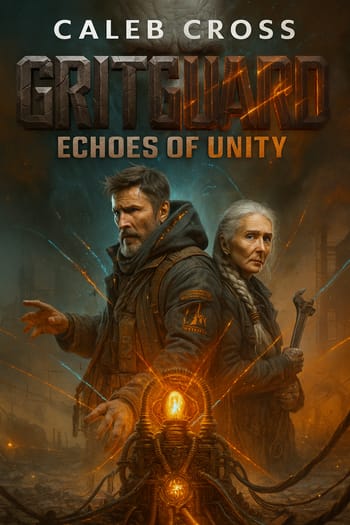
A man forged from the concrete and discipline of the Eurasian Federation, Colonel Morozov carries the weight of command not as a burden, but as a structural necessity. In his late sixties, his face is a map of hard-won battles and quiet losses, his gaze measuring the world in terms of tactical reality. He is Sineus’s mentor, a man who embodies the Federation’s core tenet—duty is the memory that holds society together. He operates within the rigid system but understands its limitations, often bending the rules to the breaking point to ensure the survival of his people. He believes hope is not a feeling, but a tool that must be built and maintained through practical work, a philosophy he passed to Sineus along with a worn, heavy multi-tool, a twin to the one he carries himself.
Irina Pavlenko
A master engineer of Union 9, Irina Pavlenko is a woman who trusts only what she can build with her own two hands. Her worldview is forged in the heat of the foundry, her faith placed in the integrity of steel and the logic of a well-designed machine. She is a pragmatist, her long grey hair braided with the copper wires of her trade, her mind a library of schematics and stress tolerances. She initially views Sineus’s mnemonic abilities as dangerous mysticism, a distraction from the real work of survival. Her journey is one of a woman of science and craft forced to confront a world that runs on faith and memory, her greatest challenge to learn that the strongest structures are built from a synthesis of both.
Lev Dementiev
Lev Dementiev is the void given a voice. The leader of the Seed of Oblivion, he is a tall, gaunt man whose eyes are solid black orbs that absorb the light. He is a surgeon of nothingness, his purpose not to rule the world, but to liberate it from the agony of existence. He believes memory is a disease, the past a weight that chokes the future. His power is the ability to consume memories, to metabolize them, leaving behind only a fine, inert dust. He has erased his own past, his own emotions, becoming a perfect, hollow instrument of his ideology. He does not hate the world; he pities it. And his pity is a death sentence for everything and everyone.
Sineus
A scout and a ranger of the Eurasian Federation, Sineus is a man who walks the line between the world of solid things and the world of fading memories. He carries a quiet, observant authority, his purpose a burden he feels in his bones but barely understands. He is haunted by a dream of the Memory Archive, a mythical place that could restore the world. His unique, innate gift is the ability to perceive and even erase the memories of others, a power that makes him a potential savior and a target for all. He is a man of few words, his hands more comfortable with the heft of an old tool than the weight of conversation. He is a gritty humanist, his belief in goodness constantly at war with the horrors he has seen, driven by a promise to honor the stubborn, illogical hope of those who fight to remember.
Items, Weapons & Artefacts
Celestial Cipher
The second of the three Keys, the Celestial Cipher is a slate of dark, unblemished crystal that feels unnaturally cold. It is not a digital device. When held by a person with mnemonic sensitivity, it projects a perfect, three-dimensional star chart directly into the user's mind. This is not a map of the dim, faded stars of the current sky, but a memory of the true stars, their light and positions unaltered by the Gloomfall. It is a memory of a time when the sky was not forgotten, a foundational truth to guide by when the world's own light has begun to fail. It is a compass for a journey across continents, its needle an unerring point of cosmic certainty.
Karkas Anchor
This is not a subtle piece of technology. A Karkas Anchor is a heavy cybernetic augmentation bolted externally to a person’s spine or limb, a harness of brass, leather, and thick copper coils. It generates a localized stabilizing field, a constant, humming projection that reinforces an object’s memory of its function. It is a brutal, pragmatic tool that screams “I am!” into the void, reminding a rifle how to fire and a canteen how to hold water. It is the brute-force solution to the Unraveling, but its use puts immense strain on the user, and its power core is a rare and precious thing. It is the anchor that allows a man to stand in a place where reality itself is coming undone.
Memory Blade
This is not a weapon for killing, but a tool for unmaking. It looks like a heavy, ornate knife, but its blade has no edge. It is a flat bar of polished alloy that grows warm when pressed against the skin. It does not cut flesh; it cuts memories. The user focuses on a specific thought, a trauma, a skill, and the Blade finds it, carefully severing it from the person’s mind. The memory is not destroyed, but stored, leaving a clean, empty space in the soul. It can be a tool of mercy, removing a crippling horror, but in the wrong hands, it is a weapon of perfect theft, capable of stealing a person’s very identity, one piece at a time.
Resonance Compass
The first of the three Keys, the Resonance Compass is a heavy brass sphere that fits in the palm of a hand. A crystal needle floats in a clear, viscous fluid at its center. It does not point north. Its needle aligns with and points towards the strongest, most stable, and most foundational memories in its vicinity. It hums with a low, steady tone when near a place of strong purpose, like a Union 9 forge, but shrieks with dissonance near a Mnemonic Scar. It is a tool for finding not a place, but a purpose strong enough to anchor reality, a guide for a pilgrimage to the heart of what holds the world together.
Sun-Seed
The third Key is not an artifact of metal or crystal, but a living thing. It is a small, incredibly dense seed, warm to the touch, that pulses with a faint, internal golden light. It is a biological archive, the last of its kind, containing the perfect, uncorrupted memory of photosynthesis. In a world where the sun is a dim ghost and most plants are mutated or dead, the Sun-Seed remembers how to drink light and create life. It can sprout in the most sterile soil, its very presence reinforcing the memory of life in its vicinity, pushing back against the Unraveling with a quiet, biological certainty. It is the memory of hope, small enough to hold in your hand.
Uzel Greatcoat
Worn by the workers of Union 9, the Uzel Greatcoat is more than a uniform; it is a tool and a logbook. Made of heavy, oiled canvas, its seams are traced with braids of coppery cord, tied in intricate knots that represent a specific job. The coat absorbs the memory of the wearer’s ritualized work, the knots becoming a physical record of a life spent in labor. This strengthens the wearer’s sense of purpose, creating a small, stable field that helps ward off the ambient decay of the wastes. The coat remembers the task, helping the worker perform their duty. It is a testament to the belief that a man’s work is his story, a story he wears on his back.