The wave had passed. The world was now louder for it. Not with sound, but with the ceaseless hum of rediscovered things. From his place on the highest watchtower of Belogorod, Sineus Belov felt it as a pressure behind his eyes, a resonance in the stone under his hands. The Heart of Truth had not brought peace. It had brought a terrible, resounding clarity. Every stolen secret, every convenient lie, every severed shame had been returned to its rightful owner. The world’s history was whole again, and it was a tapestry of scars.
He had received the first report by raven three weeks ago. The parchment, carried from the high passes of the Khevsur, was brief. Levan Dadiani had survived the return of the Kinslayer War. His people had not shattered. The memory of their civil war, a thing of pure agony when it struck him in the grove, had settled into a foundation of grim resolve. The Mountain Clans were not weakened by the truth. They were holding councils, not to assign blame for the past, but to forge new oaths strong enough to bear its weight. Their honor was no longer a brittle plate of steel. It was iron, reforged in the memory of its own breaking.
The news from the south was different. The Golden Road Consortium, that great web of contracts and influence, was in chaos. A trader’s promise was his currency, and for generations, the Consortium had balanced its ledgers with the Oblivion Blade. Now, every cut memory had been restored. Debts forgotten for a century were suddenly remembered. Betrayals sealed with a handshake and a severing were now fresh wounds. Caravans were being seized over grievances fifty years old. The intricate knots of Timur Makhmudov’s commerce had unraveled into a thousand threads of violent litigation. His empire of convenient forgetting was consuming itself in a fire of perfect recall.
Below him, Belogorod was changing too. The shift was quieter, but it ran deeper than any feud. The memory of the Winter of the Empty Hand had returned to the city’s heart. The story of the great famine, once a shameful secret cut from the founding charter, was now told in the squares. It was spoken over tea, whispered to children. The city’s history was no longer just a tale of stern warriors and wise princes. It was a story of common masons who shared their last crust of bread, of mothers who starved so their children might see the spring.
A new respect was growing in the spaces between people. Sineus saw nobles, men who had sighed with relief when the famine was forgotten, now listening to the stories of old women who remembered it. He saw a guard from the citadel watch a baker knead dough, his expression not of disdain, but of something akin to wonder. The strength of Belogorod was no longer just in its high walls. It was in the calloused hands of its people.
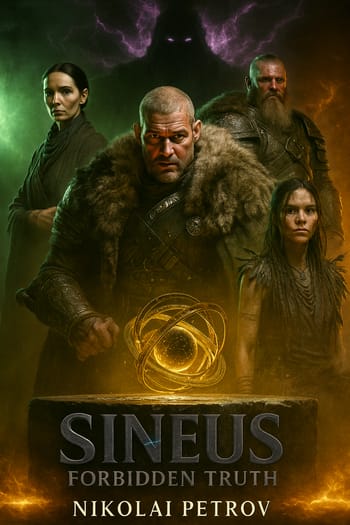
The alliance held. It was a strange and scarred thing, this bond between a northern prince, a mountain warrior, a forest guide, and a cynical archivist. It was a pact bound not by shared victories, but by the shared, agonizing weight of a complete past. They were the architects of this new, wounded world, and they were tied to one another by the truths they had chosen to unearth.
Sineus stood with Kira Zaytseva on the windswept parapet. Months had passed since the grove. She had recovered, mostly. The psychic echo of the dying star she had unleashed had left its own fine scars on her mind. There were moments she would fall silent, her eyes losing focus, her hand rising to touch the spot behind her ear where she once kept a sharpened reed. The gesture was a ghost, a memory of a habit that belonged to a woman who no longer quite existed. But she was here. She was whole.
He passed her a steaming clay mug. The strong, bitter tea was a simple, grounding thing in a world that had lost its old anchors.
— Pavel came to me this morning, — Sineus said, his voice low against the wind. His old advisor, a man who had built his life on the certainty of clean history, was now adrift. — He did not know what to do. The grain ledgers from the year of the famine have reappeared in the archives. They show which noble houses hoarded their stores.
— And which ones shared, — Kira added quietly. She looked out over the city, her gaze analytical. — Truth is a poor administrator. It is messy. It does not respect order.
— It is all we have left, — Sineus replied. He knew this victory was not an ending. It was the first, difficult breath of a new age. The work of unmaking the lies was done. The work of living with the truth, of building a world that could bear its weight, had just begun. It would be a slow, painful process of mending.
He looked south, toward the far horizon. The sky was clear, the air sharp and cold. But if he focused, if he allowed the dull ache behind his eyes to sharpen, he could still see it. A faint, grey shimmer, a stain on the edge of the world. The Echoing Blight. Its relentless advance had stopped. It was receding, starved of the fresh lies that had given it substance. But it was not gone. It was a dormant beast, a sea of forgotten things waiting for the tide to turn.
The wind cut across the stone of the watchtower, cold and clean. The sun was low, casting long shadows across the riverlands.
The world was saved. But now, the real accounting began.