World & Cosmology
In this world, reality is not made of matter, but of memory. The universe is a finite story, written into being from the Pervopis, a shimmering, silvery mist of raw, unformed potential that waits at the world’s edge. This is a place of pure possibility, where faint, glowing patterns like an unknown alphabet shift and flow, waiting for the command of a story to give them form. The fundamental law that governs this creation is Istopis: the principle that focused, collective memory can shape the Pervopis into physical substance. A fortress stands not because of its stone, but because of the unyielding memory of its strength. A forest grows not from soil, but from the deep, ancient memory of its own existence. This process is largely unconscious, the quiet hum of a world remembering itself into being.
At the heart of this cosmic mechanism sits the Loom of Ages, a silent engine of light that exists outside of normal space. The Loom does not think or judge; it only balances. In its natural state, Sklad, it gathers and preserves every memory, maintaining the complete and true fabric of the world. But the peoples of this world discovered a terrible art: the ability to cut away their past. They sever memories of famine, defeat, and shame, believing it makes them stronger. Each cut, however, is an act of violence against the world’s soul. These discarded memories—raw, shrieking fragments of pain and loss—do not disappear. They drift and gather into the Echoing Blight, a monstrous, growing cancer of oblivion that consumes the world. As the weight of forgotten things grows, the Loom tilts toward its other state, Razlad. In this mode, it does not destroy, but severs meaning from matter. A river forgets how to flow; a fire forgets how to burn. The Blight is the price of a censored reality, and it threatens not to conquer the world, but to unmake it entirely.
Core Systems & Institutions
Memory & Artifice
The manipulation of memory is not magic, but a grim and costly craft. It is a form of metaphysical surgery performed with heavy, functional tools. To see the past, an adept must use Prizmy Yasnosti, Clarity Lenses of polished obsidian set in brass. Through them, the world is overlaid with the Pod-sloy, a ghostly shimmer of what was, revealing the memory-threads clinging to people and places. To sever one of these threads, an arbiter wields a Sekach Pamyati, a Memory-Severer whose dark steel blade cuts not flesh, but history. The act is silent, precise, and leaves a psychic scar—a high, thin rasping sound called Shepot Utrat that only a few can hear. This craft is the foundation of power, allowing rulers to purify bloodlines and erase defeats. But the cost is absolute. Each cut inflicts deep mental strain on the user, a cold echo of the pain they excise. More terribly, every severed memory becomes a morsel for the Echoing Blight, a conscious act of feeding the very force that will bring about extinction. It is a technology of self-deception, a tool for winning battles while guaranteeing the loss of the war.
Faith & Philosophy
The world is divided by two fundamental faiths, one of the lie and one of the truth. The great factions—the Knyazdom of Belogorod, the Mountain Clans of the Khevsur—practice a religion of the curated self. Their rituals center on ancestor veneration and the sanctity of an official, flawless history. For them, strength is purity, and purity is achieved by cutting away the weakness of the past. A memory of famine is a flaw in the state’s body; a memory of dishonor is a cancer on a family’s soul. These must be excised with the cold reverence of a priestly surgeon. Their temples are halls of judgment, their rites are acts of forgetting, and their greatest sin is not the lie itself, but the acknowledgment of it. In stark opposition are the Forest Folk, who walk the Path of Wholeness. They believe the world is a single living spirit, and the Blight is its cry of pain. They teach that memories, especially the painful ones, must be held and understood, not discarded. Their shamans guide others to confront their full past, to integrate sorrow and joy, believing that a person, or a world, is only made strong by carrying the complete weight of what it is.
Dominion & Order
Power in this world is not seized with armies alone, but with the quiet authority of a scribe’s blade. The great states and power blocs are built upon foundations of convenient falsehoods. A Knyaz’s right to rule is proven not by his strength, but by a founding charter from which all memory of usurpation has been ritually severed. A clan’s honor is maintained not by virtue, but by erasing any record of its shame. Social structure is a carefully edited manuscript. Lineage is a story polished until it gleams, its inconvenient chapters torn out. The law is enforced by arbiters who consult not what happened, but what is officially remembered. This makes society stable but brittle. The universal taboo, the unspoken sin that underpins all dominion, is the admission that this curated reality is a choice. To speak of what was cut away is the ultimate treason, for it threatens to unravel the entire social fabric by revealing that the emperor, his castle, and his history are all built from nothing but a shared, enforced lie.
Barter & Obligation
The economy operates on two levels: the tangible and the metaphysical. On the surface, trade is in grain, iron, textiles, and salt, moved by caravan and ship, and paid for in silver coin. This is the world of honest work and physical need. But beneath it runs a shadow economy where the true currency is memory. The Golden Road Consortium has mastered this art, treating history as a ledger to be balanced for profit. A lord might pay a fortune to have the memory of a shameful defeat severed from his family’s heirloom sword. A trader can secure a vital route by erasing a rival’s memory of its existence. An Oblivion Blade is a tool of commerce, used to cut away bad debts from a partner’s mind, ensuring the Consortium’s reputation remains artificially perfect. In this market, a flawless history is the greatest asset a house can possess. Every such transaction, an act of pure vanity or commercial pragmatism, has a catastrophic public cost. Each erased debt, each forgotten failure, adds another drop of poison to the Echoing Blight, a debt being passed on to the world itself.
Conflict & Doctrine
The true war is not between nations, but between the world and its own slow suicide. The primary threat is the Echoing Blight, an existential tide of oblivion that is the direct consequence of the factions’ core doctrines. While rivalries are constant—the stern lords of Belogorod distrust the honor-bound Khevsur, who in turn despise the profit-driven Consortium—these are skirmishes on the edge of an apocalypse. Each faction’s doctrine of survival is the engine of their shared destruction. Belogorod cuts away weakness to remain strong. The Khevsur erase dishonor to remain pure. The Consortium severs losses to remain profitable. Each act, performed with solemn conviction, feeds the Blight. The central moral conflict is therefore not good versus evil, but Truth versus Survival. It asks whether a functional, orderly lie is better than a devastating, chaotic truth. The factions’ goal is to maintain their power and perfected identity, even as their methods hasten their own unmaking. The only hope lies in forcing these warring cultures to unite and embrace their complete, unfiltered histories—a cure most would see as worse than the disease.
Mysteries & Anomalies
The world’s fabric, woven from memory, is prone to fraying. Where reality is damaged or history is particularly strong, strange phenomena manifest. A Zastyvshiy Sled is a memory-echo, a ghostly, looping reenactment of a powerful past event, forever imprinted on a location. The Pod-sloy is the faint, shimmering veil of all that has ever been, a ghostly layer of the past that only seers can perceive, a constant, wearying source of unfiltered truth. In contrast, a Kolybel Tishiny is a null-zone, a valley of absolute silence where memory cannot exist, a black wound in the world where a person can forget their own name. The act of memory-cutting leaves its own scars: the Shepot Utrat, a high, rasping sound audible only to a few, is the shriek of torn reality. Sometimes, the damage is so great it creates an Izlom Budushchego, a silent, shimmering tear in the air that shows a fixed vision of an inevitable future event—a flood after a dyke’s memory of integrity is cut. These anomalies are not magic, but the natural symptoms of a world under immense metaphysical stress, the groans and shudders of a reality breaking under the weight of its own lies.
Peoples, Factions & Cultures
Belogorod, Knyazdom of
The people of Belogorod are stern, orderly, and forged by the cold northern riverlands. Their fortress-cities of white stone and dark wood reflect their soul: a facade of pure, unblemished strength built to hide a dark and pragmatic core. Their driving philosophy is that weakness is a disease to be surgically removed from the body of the state. Through solemn ritual, they use the Sekach Pamyati to cut away memories of famine, plague, and defeat from their charters and their minds. They see this not as lying, but as a sacred duty of purification. This practice has made them powerful and resilient, but also arrogant and blind. They view the encroaching Blight as a foreign corruption, failing to see it as the direct consequence of their own actions. Their children are taught tales of unbroken victory, and their greatest fear is not destruction, but the revelation of their own imperfect, human past. They are a people who have traded their history for a flawless, and therefore fragile, identity.
Forest Folk
Dwelling in the ancient, whispering taiga, the Forest Folk are the world’s living conscience. They are an animistic people who believe that all things—trees, stones, rivers—possess a memory, and that these memories form the collective soul of the world. For them, the Echoing Blight is not an enemy to be fought with steel, but a great spirit wounded by the lies and forgetting of others. Their philosophy is the Path of Wholeness, a discipline of accepting and integrating all memories, both painful and joyous. Their shamans, like Antero Kallas, do not cut away pain but guide others to understand its place in the tapestry of their lives. They move with a quiet grace, their senses attuned not to the physical world, but to the emotional residue left in the soil and stones. They are wary of the great factions, seeing their curated histories as a form of self-mutilation that harms the entire world. Their hope is not in victory, but in healing.
Golden Road Consortium
The Golden Road Consortium is not a nation, but a web of trade and influence more powerful than many kingdoms. Its members are pragmatic Central Asian traders who see the world not in terms of honor or glory, but of profit and loss. For them, history is a ledger, and memory is a currency. Their primary tool is the Oblivion Blade, a type of Sekach Pamyati used to "balance the books" by erasing memories of failed caravans, bad debts, or inconvenient contracts from the minds of their partners and rivals. This ruthless pragmatism ensures their caravans run on time and their reputation remains artificially perfect. They view the Echoing Blight as a regrettable but necessary cost of doing business, a manageable externality in the grand pursuit of wealth. They command little true military might, relying on hired guards and the power of their coin. Their foundational myth is not of gods or heroes, but of the first trader who realized a forgotten debt is a debt that does not exist.
Khevsur, Mountain Clans of the
The Khevsur are a proud, honor-bound people from the high mountain passes of the Caucasus. Their entire culture is built upon a rigid and complex code of honor, a currency they value more than gold or life. A Khevsur warrior’s soul is not within him, but upon him; their deeds and lineage are etched directly into their ritual armor, the Abjari Pativisa, as memory-paths. An honorable act strengthens the steel, while a dishonorable blow is a stain that cannot be hammered out, only overwritten by a greater victory or ritually cleansed. They believe this flawless, curated history of honor makes them invincible. However, this towering pride is brittle, built upon a carefully erased history of shame, such as the Kinslayer War. The revelation that their strength is founded on a lie can shatter a Khevsur warrior’s spirit completely. They fear dishonor more than death, making them both formidable and tragically vulnerable.
Vessels, Constructs & Locations
Belogorod
A city of white stone and dark wood, Belogorod is the heart of the northern Knyazdom. It is a place of stern order, its fortress walls rising from the riverlands as a testament to a history of unbroken strength. The air is heavy with the scent of damp stone, pine resin, and the cold river, and a grim silence often hangs in its halls. To its people, Belogorod is a symbol of purity and fortitude, a city perfected by the careful curation of its past. To its ruler, Sineus, it is a prison of lies, its white walls a facade hiding the darkness of what has been forgotten. The city is bordered to the south by the Echoing Blight, a threat its nobles see as distant and manageable, failing to understand that the city’s very strength—its willingness to cut away its own history—is what feeds the monster at its gates.
Blight-Touched Lands
These are the borderlands of oblivion, the sterile, grey landscapes that surround the core of the Echoing Blight. The earth here is dead, having "forgotten how to be earth," and the porous, bruised-looking rock is slick with a greasy lichen that pulses with a sickening rhythm. A profound silence hangs in the air, broken only by the low thrum of the Blight itself, and a damp, bone-seeping chill persists even on sunny days. The Pod-sloy, the world’s memory-layer, is thin and frayed here, showing only twisted smudges of fear and pain. For travelers, it is a terrifying wasteland to be crossed with haste. For a seer, it is a place of profound sickness, a landscape suffering from a metaphysical cancer that has erased its identity and left only a scar.
The Blightforge
The Blightforge is not a place on any map, but a manufactured reality, a mobile fortress grown from malice within the Echoing Blight itself. It is a workshop for unmaking the world, where the chaotic power of the Blight is harnessed and given purpose by its unseen Master. The air is cold, thin, and smells of ozone and hot metal, and the only light comes from contained tornadoes of whispering shadow that writhe like pillars in the vast darkness. To a warrior, it is an impossible fortress of black iron and bone. To a seer, it is a place of terrifying, weaponized agony, a structure built not from stone, but from curated pain and stolen despair. It exists in a pocket dimension outside of normal space, a testament to a power that does not merely destroy, but commands destruction itself.
Echoing Blight
The Blight is the physical manifestation of all that has been forgotten. It appears as a wall of unnatural, churning black and purple fog that creeps across the land, swallowing everything in its path. It does not break things, but un-makes them, erasing them from existence and leaving behind a smooth, featureless void. For seers, its advance is accompanied by a high-pitched mental rasp, the collective shriek of countless severed memories. The Blight is a sentient cancer born of lies, feeding on the void left by excised history. It can stitch together monstrous creatures from mismatched memories of pain and fear, and its touch can induce madness by flooding a mind with the agony of a thousand forgotten sorrows. It is the world’s shadow, the bill come due for a history of self-deception.
Hall of Lost Worlds
Deep within the Sunken Scriptorium lies this vast, subterranean archive, a library of apocalypses. The air is cold and thick with the scent of dust and dry paper, and the immense quiet swallows all sound. Hundreds of alcoves line its walls, each holding the final, poignant record of a civilization consumed by the Blight. For the Scriptorium’s archivists, it is a classroom for teaching despair, a curated tour of futility meant to crush the hope of any would-be hero. It contains the war banner of a people who cut away all memory of defeat, and the obsidian disks of thinkers who logically proved their own extinction. It is a monument to failure, designed to prove that resistance is impossible. Yet hidden within it, dismissed as a statistical anomaly, is a single stone tablet that tells a different story: one of survival.
Izlom Budushchego
An Izlom Budushchego, or "Break of the Future," is a rare and terrifying symptom of deep memory damage. It appears as a silent, shimmering tear in the physical world, like fractured glass suspended in the air. Within the rift, a colorless, distorted scene plays out—a direct and factual preview of an event from the near future that is now guaranteed to happen. It is not a prophecy of what might be, but a vision of what will be, the inevitable consequence of a powerful memory being severed from reality. Cutting the memory of a dam’s integrity, for example, might create an Izlom showing the subsequent flood. One cannot create or control this phenomenon; it is a chaotic warning, an echo from a future that has just been locked into place. Staring into the tear offers a stark but brief warning, but the outcome itself cannot be changed.
Kolybel Tishiny
The Kolybel Tishiny, or "Cradle of Silence," is a natural dead zone for memory. It is a small, isolated valley surrounded by sheer cliffs where a strange, pale moss grows on the stones. The air inside is always still and cool, and all sound is muffled and distant. For a seer, the valley is a terrifying void, a black wound in the world where objects have no past and reality has no depth. Any memory a person carries into the valley begins to fade, and actions performed within it are not recorded in the mind. It is a place of absolute secrecy, where factions can meet without fear of their words being remembered. However, the cost of this perfect privacy is disorientation and a potential loss of self. It is a place hostile to the mind, an island of pure, unnerving emptiness in a world defined by its past.
Loom of Ages
The Loom of Ages is not a physical object but a cosmic engine, a vast pattern of silent, pulsing light that exists outside of normal space. It is the silent arbiter of reality, a mechanism of pure consequence that balances the world’s memory. In its natural state, Sklad, it gathers and preserves every memory, weaving the true and complete tapestry of existence. But as societies cut away their histories, casting them into the Blight, the Loom tilts toward its other state: Razlad. In this mode of unmaking, it does not destroy memories but severs their meaning from matter, causing the world to forget its own laws. The Loom cannot be controlled or petitioned. It only reacts. The only way to influence it is to heal the world’s memory, for it is an engine that rewards truth with coherence and punishes lies with chaos.
Pod-sloy
The Pod-sloy is the tangible, visible layer of past memories that clings to the physical world. For those with the sight, like Sineus Belov, it appears as a ghostly, shimmering overlay of past events and people, flickering at the edge of vision. A new wall shows the ruins it was built upon; a young man flickers with the image of his childhood self. It is a constant, wearying source of unfiltered truth in a world built on lies. The Pod-sloy has no sound or smell, but its perpetual presence causes a dull ache behind the eyes of those who can perceive it. It holds the passive echoes of everything that has happened, a fragmented and uncontrolled library of what was. For the factions who practice memory-cutting, its very existence is a dangerous, heretical concept, a constant reminder of the truths they have tried to bury.
Sunken Scriptorium of Ur
Carved directly from the walls of a vast ochre canyon far to the south, the Sunken Scriptorium of Ur is the world's last neutral archive. To most, it is a folktale; to scholars, a sanctuary of truth. It is a city of windows and colonnades with no external fortifications, a place of profound silence that smells of old paper and stone. Its purpose is to collect and preserve all knowledge, especially the final records of civilizations that have fallen to the Blight. Its lead archivist, Kira Zaytseva, sees its role as managing endings and teaching the futility of hope. But hidden deep within its sealed vaults, guarded by ancient oaths, are records of world-ending artifacts and dangerous truths—including the one, desperate hope for a solution to the Blight. It is a tomb of histories, but also potentially the cradle of a new one.
Zastyvshiy Sled
A Zastyvshiy Sled, or "Frozen Trace," is a memory so powerful it has been permanently burned into a location. It appears as a localized shimmer in the air, within which ghostly, transparent figures silently reenact a powerful past event—a legendary duel, a forgotten ceremony, a moment of profound betrayal. These are not interactive spirits but recordings, playing in a perfect loop, often triggered by specific conditions like sunrise or a storm. One can observe a Sled to learn from the past, but it is dangerous to linger. The strong emotional residue of the event can overwhelm an observer, overwriting their own feelings or memories. These phenomena cannot be cut or altered; the memory is woven too deeply into the fabric of the world itself, a permanent scar and a testament to a moment that refused to be forgotten.
Notable Characters
Alani Vainu
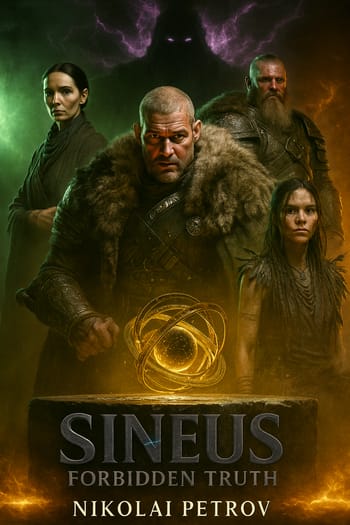
A young woman of the Forest Folk, Alani Vainu is a guide whose compass is empathy. She does not see the past as Sineus does; she feels its emotional residue—the joy, pain, and fear left like a stain on the soil and stones. She navigates by sensing the "health" of the world, guiding her companions along paths that are not wounded by curdled, painful memories. She moves with a quiet grace, her eyes constantly scanning an unseen emotional landscape. Initially wary of Sineus’s memory-cutting heritage, she comes to see his quest for truth as an alignment with her people’s core beliefs. She is the party’s spiritual anchor, urging Sineus not just to see the world’s wounds, but to listen to its pain, and to act with a compassion that Fedor’s pragmatism and Sineus’s grim duty often overlook.
Fedor Sokolov
Fedor Sokolov is the anchor to the physical world. A veteran of the northern border wars, his face is a roadmap of old scars, and he moves with the quiet confidence of a man who trusts only the bite of his axe and the strength of a shield wall. He serves Knyaz Sineus not out of political duty, but from a profound, paternal loyalty to the man he has protected since childhood. He is fiercely protective, viewing the strange, invisible world of memories as a constant threat to Sineus's safety and sanity. He is a man of few words, his dissent often shown only by a tightened jaw. For Fedor, a problem is a foe to be struck, and his immediate instinct is always to place his body between his prince and any threat, be it a monster of the Blight or the crushing weight of an unseen sorrow.
Kira Zaytseva
As Lead Archivist of the Sunken Scriptorium, Kira Zaytseva is the guardian of a library of apocalypses. Her worldview has been shaped by cataloging the fall of countless civilizations, leaving her with a weary, sharp-edged cynicism. She sees the factions' self-deception not as a political choice, but as a terminal illness, and she views hope as a recurring, and always failing, data point. Her purpose is not to be cruel, but to protect the Scriptorium’s neutrality by "managing endings"—showing would-be heroes the historical futility of their quests. Her core conflict is the collision between her professional despair, backed by a thousand cautionary tales, and the irrational, contagious hope of Sineus Belov, a force that threatens to dismantle her logical, ordered world of predictable failure.
Levan Dadiani
Levan Dadiani is the embodiment of Khevsur honor, a warrior from the Mountain Clans whose very soul is etched into the steel plates of his armor. Each swirling line on his Abjari Pativisa is a memory of an ancestral deed, a physical record of his lineage’s flawless strength. He carries himself with the unbending pride of a man who believes his history is perfect. His tragedy is the discovery that this strength is built on a lie. The revelation that the Khevsur’s greatest shame—the Kinslayer War—was not erased but stolen and weaponized by an enemy shatters his identity, leaving his pride a hollow shell. His journey becomes one of finding a new, harder strength, one forged not from a curated history of glory, but from the terrible weight of a truth finally reclaimed.
Pavel Orlov
Pavel Orlov has served the Belov family for forty years, a man of ledgers, treaties, and maps whose primary concern is the stability and security of the Knyazdom. He is a pragmatist, not a coward, who believes survival is won through careful resource management, fortified walls, and the preservation of Belogorod’s curated history. He sees Sineus's quest as a noble but reckless gamble, risking their city's strength on a folktale and an appeal to untrustworthy rivals. His counsel is always one of caution, urging his prince to consolidate their power rather than exposing their weaknesses to the world. When the truth of history is finally restored, he is left adrift, a man whose entire worldview was based on clean ledgers and orderly lies, now faced with a messy, complicated truth he does not know how to manage.
Rostislav Kurov
Rostislav Kurov is a man who has built himself from the stolen glories of others. A mercenary warlord from the blighted borderlands, he appears as a perfect warrior-king, his armor shimmering with heroic deeds. In truth, this is a shell; he uses a corrupted memory-cutting technique to steal the glorious memories of his enemies, weaving them into his own persona while cutting away any hint of his own shameful past. He believes strength is a narrative to be written, and that he is merely a tool for the true author. He is a void wearing a mask of heroism, a collector of strength who uses the stolen agony of others as a shield to make himself invisible to the Blight. He sees Sineus's quest for truth as a fool's errand, seeking to seize the world’s most powerful artifacts to make his own false history the only one.
Sineus Belov
The Knyaz of Belogorod, Sineus Belov is a burdened seer in a kingdom of the blind. He is the only one who can naturally see the Pod-sloy, the ghostly layer of the world’s true, unfiltered past. This sight isolates him, forcing him to live with the constant, aching weight of the lies his people tell themselves. While his court performs rituals to cut away weakness, Sineus sees the wounds these acts leave on the world and hears the shriek of torn reality. He believes his nation’s "clean history" is a vulnerability, not a shield. His quest is not for power or glory, but to force a world on the brink of extinction to confront the painful, unvarnished past it has tried to murder. He is a quiet, stern leader, driven by a grim sense of duty to heal a world that sees his truth as a disease.
Timur Makhmudov
Timur Makhmudov is the aging master of the Golden Road Consortium, a man with the weathered face of a traveler and the sharp, calculating eyes of a banker. He treats history like a ledger that must be balanced for profit. He carries an Oblivion Blade at his belt, a tool of commerce he uses to cut memories of failed caravans and bad debts from the minds of his partners, keeping the Consortium's reputation artificially perfect. He sees memory as just another form of currency to be spent or saved. His assistance to Sineus is not an act of kindness but a strategic investment, an attempt to secure an obligation from a northern lord. He considers the Echoing Blight a necessary cost of doing business, a man who would burn down a forest to collect the insurance on a single tree.
Zoya Petrova
For fifty years, Zoya Petrova has been the Keeper of the Sealed Archive, a frail-looking woman who has lived in the deepest vaults of the Scriptorium, guarding the records deemed too dangerous for the world. She is not cynical like Kira, but deeply weary, burdened by the weight of the secrets she holds. Bound by ancient oaths, her core philosophy is that some truths are so devastating—plagues of the mind, paradoxes that unravel reality—that they are better left forgotten. She is the final guardian, a moral and philosophical obstacle who believes she is protecting the world by imprisoning its most volatile ideas. Her duty forces her to stand against Sineus's quest, not out of malice, but from the conviction that the cure he seeks is a world-ending catastrophe in its own right.
Items, Weapons & Artefacts
Abjari Pativisa
This is the ritual armor of Khevsur warriors, a sacred text written on dark steel. It is not merely forged, but inscribed with the very memories of a warrior’s lineage. Using a special tool, a Khevsur etches the memory of an honorable deed into a plate, and the memory itself reinforces the steel, making it stronger. The armor of a veteran is a dense tapestry of these inscriptions, a physical record of a flawless history of honor. A dent from a dishonorable blow cannot be hammered out; it can only be overwritten by a new memory of a greater victory. The armor is a testament to the law of Istopis, where memory shapes matter, but it offers no protection from the one thing a Khevsur fears most: a truth that contradicts the story it tells.
Anomaly 734 (The Unfinished Tablet)
This simple, rectangular tablet of pale sandstone is the only known record in the Hall of Lost Worlds that details a civilization surviving a Blight-like entity. To the Scriptorium, it is "Anomaly 734," a flawed and incomplete data set to be dismissed. To Sineus, it is tangible proof that survival is possible, a single note of hope in a library of despair. Its blocky, worn script tells of a losing war, a desperate gamble, and a turning tide, but the final entry—the one explaining how they survived—is missing. This absence makes it a question, not an answer. The search for this missing piece, for the secret of the "Heart Of Truth," is what drives the quest to unlock the Scriptorium's deepest secrets.
Prizmy Yasnosti
The Clarity Lenses are not a tool of creation, but of grim perception. They consist of two large, polished river-quartz lenses set in a heavy frame of dark, forged iron, built for function over beauty. A wielder, typically an arbiter or archivist, holds the device to their eyes and focuses their will, revealing the Pod-sloy—the faint, ghostly layer of memory clinging to reality. Through the Prizmy, a wall might show the phantom shape of a forgotten gate, and a person reveals the shadows of their recent actions. They are essential for the work of memory-cutting, allowing the user to see the threads of history before they are severed. Using them is taxing, causing sharp headaches and leaving the eyes aching, a physical price for viewing the world’s wounds.
Sekach Pamyati
The Memory-Severer is a short, heavy tool, not a weapon. Its blade is forged from a dark, rippled steel with an unnaturally sharp edge that seems to drink the light. Its purpose is to perform metaphysical surgery: to cut a memory from a person or object. An arbiter, viewing the memory-thread through Clarity Lenses, presses the Sekach’s edge to it, and the connection is silently severed. The Knyazdom of Belogorod reveres it as a tool of statecraft, used to purify history and strengthen the nation. But each cut is an act of violence against the world’s soul. The severed memory does not disappear; it drifts away to feed the Echoing Blight. The Sekach is a tool of purification and damnation, a blade that carves a wound into the world with every use.
Heart of Truth
The Heart of Truth, is the world’s last, desperate hope. It is a small, unassuming object, a polished stone the size of a pigeon's egg that feels warm to the touch and pulses with a faint, internal light. It is not a weapon to be wielded, but a seed to be planted in a place of great, living memory, like the sacred groves of the Forest Folk. Once planted, it does not grow a crop, but releases a silent, shimmering wave of pure, unedited memory across the land. This act does not destroy the Blight, but starves it by re-anchoring reality in truth. It forces people and places to remember what was cut away, healing the world's wounds by forcing everyone to confront their painful, unvarnished histories. It is a promise of painful healing, a cure that will first shatter the peace of lies.
Vechevy Kolokol
A Vechevy Kolokol is a massive bronze bell, a tool for creating shared, undeniable truth. The great bell of Belogorod is used to announce the completion of a memory-cutting ritual, its single, powerful note a hollow reassurance of the city’s strength. The more powerful bell in the neutral Sunken Scriptorium, however, can be used to broadcast a single, potent memory across an entire region. By striking the bell while it is infused with a memory from a historical object, a user can make everyone in the vicinity experience an event as if they were there. It can be used to prove a lineage or seal a treaty with a shared memory of an oath. But the bell does not know truth from lies; it will broadcast a fabrication with the same force as a real event, making it a powerful tool of consensus and a terrifying weapon of propaganda.
Wolf's Head Clasp
Fashioned from silver, this simple clasp in the shape of a wolf's head is the official seal of the Knyaz of Belogorod. It is more a mark of office than a piece of jewelry, a functional object that smells faintly of woodsmoke and the cold air of the north. To a northern lord, it is a symbol of legitimate power and heritage. To a southern trader like Timur Makhmudov, it is a political marker, instantly identifying its wearer as a person of significant influence, a key to be turned or a piece to be moved on the great board of politics. The clasp is a small detail, but in a world of shifting alliances and guarded conversations, this unassuming piece of silver can change the nature of an encounter, opening doors or marking its wearer as a target.