In Power Control, Ana Sharma’s hands trembled. She was a watcher. A keeper of logs. Her job was to notice things and say nothing. But she had watched Deacon Marcus audit Lena Petrova’s workshop, had seen the cold satisfaction in his eyes. She had been made a monitor, a jailer for the only person who had ever treated her with simple, technical respect. The price of her safety had become her conscience, and the payment was overdue.
Her objective was simple sabotage. Her obstacle was a lifetime of obedience. She looked at the console, at a schematic of the station’s primary power bus. A thick, glowing artery. To flood it was not a simple command. It required a physical key turn and a simultaneous command override. A two-handed action, a choice you could not make by accident. Loyalty to Lena, a woman who saw data, was the cause.
Ana inserted the maintenance key. Her heart hammered against her ribs, a frantic bird in a small cage. She typed the override string. The system asked for confirmation. It was a stupid question. Of course it was a catastrophic action. That was the point. She pressed her thumb to the confirmation panel and turned the key. For a moment, nothing happened. Then, with a low groan that vibrated through the deck plates, the station’s main power went to zero percent.
The Equilibrium Hum died. The sudden, absolute silence was more violent than any explosion. Then the emergency lights kicked in, bathing the corridor in a sick, low-wattage yellow. The world went from a sterile operating theater to a jaundiced tomb. A wave of chaos followed the silence. Distant shouts. The clang of a dropped tool. The station, a thing of perfect, placid order, was thrown into confusion. Security would be distracted. That was the opening.
In the sudden darkness of the Choir, Lena Petrova did not hesitate. The blackout was a gift. She had been waiting outside the sealed chamber, a ghost in the service corridors, her purpose a single, hard knot in her gut. The failure of the main power meant the listener’s chair would have disengaged its primary restraints. She keyed open the door, the mechanism sluggish on emergency power.
She found Elias in the gloom, lit by the faint yellow glow from the corridor. He was slumped in the chair, the interface halo retracted. He was not moving. For a terrible second, she thought she was too late. She rushed to his side, a small, sharp tool in her hand. It was a magnetic clamp release, a piece of tech not meant for this purpose. She jammed it against the locks of the secondary restraints.
— Elias, — she whispered, her breath fogging in the cold air. The smell of burnt insulation was sharp.
The restraints clicked open. He did not respond. She grabbed his arm, ready to haul him out of the chair, to drag his body if she had to. Then he moved. He pushed himself up, his movements stiff but his own. He stood, a silhouette against the emergency light, and the way he held himself was different. The novitiate’s hesitant posture was gone. He was hardened, changed, as if the ordeal in the Anamnesis Maze had burned away everything but the essential structure.
— Lena, — he said. His voice was flat, a quiet, scraped thing. It was the voice of a man who had been somewhere terrible and had not entirely come back. But he was back enough.
Ana Sharma met them in the corridor just outside the Choir. She was shaking, her face pale in the ugly light. She looked from Lena to Elias, her eyes wide with what she had done. She had broken the first rule. She had acted.
— I— — Ana started, her voice a tremor.
— You did good, — Lena cut her off, her tone clipped and final. She pushed a loose strand of hair from her face. — You did exactly right. Now we move.
The three of them stood there for a moment, a rebel cell of two scientists and a failed saint, huddled in the flickering emergency twilight. The station’s automated alarms were a distant, confused chorus. They had a window. It would not be open for long.
— We can get to the maintenance shafts, — Lena said, already thinking three steps ahead. — From there, the lower decks. Maybe the docking spine. If we can get to a shuttle—
— No, — Elias said. The word was quiet but absolute. It stopped Lena cold. He looked at her, and his eyes were not the eyes of the young man she had made an alliance with. They were older. The fear was gone, replaced by a terrifying clarity. — No escape.
He thought of the Cracked Slate of Korbin, of its shattered pieces on the floor of the Synod Chamber. Clement had destroyed the object, the proof. But he had not destroyed the idea. The idea was to show them the truth. Escape was just another form of silence.
— Elias, they will hunt us down, — Lena insisted, her voice low and urgent. — They will tear this station apart to find us.
— Let them, — he said. He looked from Lena to Ana, seeing not a hardened technician and a frightened girl, but the first two citizens of a new world. He was about to ask them to burn the old one down. This was the synthesis. He had seen the lie from the outside, and now he had felt the truth from the inside. The new plan was born from that terrible fusion. It was not about survival. It was about revolution.
— Clement’s power is the story, — Elias said, his voice gaining a low, resonant strength. — The single, comforting story he tells everyone. We have to break it. Not just for us. For everyone.
— How? — Ana whispered. — They have the Scriptorium. They have the Anchors.
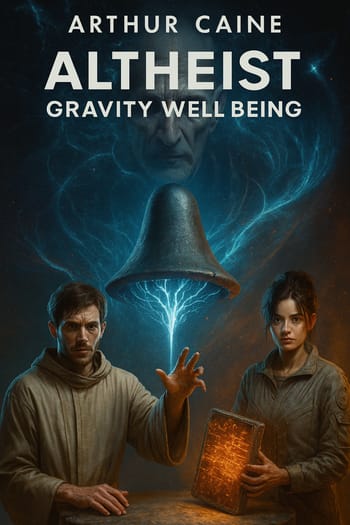
Elias looked back toward the dark, silent chamber of the Choir. He looked at the Oecumene Horn, a black, sleeping bell in the center of the room. He had been its victim. Now he would be its master. The price of this new plan was the station’s order, its very sanity. He named the cost without flinching.
— We won’t just show them the truth, — Elias said, his voice the quietest thing in the chaotic station, and the most dangerous. — We’ll make them hear it.
The air was cold and smelled of ozone. The emergency lights cast long, dancing shadows.
Now, they would take the heart of the station.