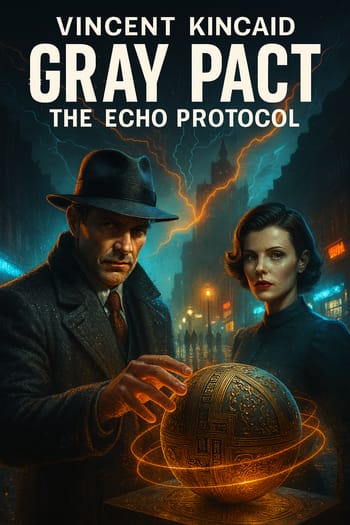
The rain over Vienna fell with the grim persistence of a bill collector. It wasn't clean rain. It was the kind that washed the soot from a thousand chimneys and the lies from a million whispers, turning the cobblestones of the alley into a slick, black mirror. For most people, it was just a wet Tuesday night. For me, it was a job. I stood just inside the mouth of the narrow passage, the collar of my coat turned up against a chill that had nothing to do with the October air.
Ahead of me, the world was broken. It was a small fracture, a patch of asphalt about three meters across that shimmered with a light that didn't belong. The rain hesitated above it, each drop hanging for a half-second too long before surrendering to a gravity that felt tired and uncertain. The air smelled of ozone and burnt sugar, the signature of a memory bleeding into the present. A fresh one. A bad one. I could feel the temporal stutter in my teeth, a low hum that vibrated up through the soles of my shoes.
I moved deeper into the alley, my steps silent on the wet stones. The flickering patch of reality was a wound, a place where a moment of intense trauma had been looped into the fabric of spacetime. If left alone, it would fester. The stutter would spread, the hum would grow louder, and soon whole city blocks would start forgetting which way was up. My job was to be the surgeon. To cut the infection out before it could spread.
I stopped at the edge of the shimmer. The air grew thick, heavy. I closed my eyes, not to see better, but to see differently. I let my focus drift, pushing past the physical world of brick and water and into the raw architecture beneath. It was a place of structure and echo, and I was looking for the flaw, the single, screaming thread that held this glitch together. A cold sensation, sharp and invasive, permeated my body as I reached into the mess with my mind. It was the price of entry.
I found it. A traffic accident. The memory was jagged and hot, a chaotic knot of screeching tires, shattering glass, and the coppery tang of blood. I didn't need to see the whole thing, just the edges. I traced the shape of the trauma, feeling its psychic contours, searching for the anchor point where the loop reset. The cold deepened, a familiar ache spreading from my temples down my spine. I was losing heat, a physical cost for a metaphysical act. The strain was a pressure building behind my eyes.
There. The core of it. The single instant of impact, the moment of absolute terror that had burned itself into the asphalt. I isolated it, wrapping my focus around the memory like a wire snare. It fought back, a wild, senseless thing lashing out with phantom pain and fear. I ignored it. I had my target. All that was left was the cut.
I took a breath, held it, and with a final, sharp exertion of will, I severed the memory from its anchor. It was a clean break, a silent, surgical strike in a war no one else could see. For a barest fraction of a second, the world went white behind my eyelids, and the hum in my bones stopped. The psychic energy I’d expended left a void, a sudden, draining emptiness.
I opened my eyes. The shimmer on the ground was gone. The rain fell straight and hard, drumming a steady, normal rhythm on the stones. The smell of ozone had vanished, replaced by the clean, damp scent of wet earth and cold brick. The alley was just an alley again. I had restored the natural order of things, stitching the wound closed. The world was stable, for now.
I glanced down at a puddle near my feet. My reflection stared back, but for a flicker, just over a second, it wasn't me. The man in the water wore a different coat, a lighter one, my face untroubled. The face of a man who had kept walking, who had never turned down this particular alley. A ghost of a choice not made. Then the image dissolved into a brief hiss of visual static, and my own tired face returned.
A familiar ache settled behind my eyes, the price of the work. It was a specific kind of exhaustion, a weariness that settled deep in the bones, a chill that no amount of wool could keep out. My stamina felt drained, a physical toll for a non-physical act. I straightened up, pulling my collar tighter. The job was done. Now I had to deal with the aftermath.
I walked out of the alley and back onto the main street. The sounds of the city returned—the distant wail of a saxophone, the rumble of a passing tram, the low murmur of conversations spilling from a nearby cafe. Normal sounds. Honest sounds. I needed a drink, something strong enough to wash away the metaphysical cold that clung to me.
The neon sign of a small bar across the street bled red onto the wet pavement. It promised whiskey and a measure of quiet.
I pushed through the door, the promise of forgetting just a few steps away.