World & Cosmology
The world is not solid. It is a story. A script, written in a language no man speaks, a proto-script called Memorum. This script is the law. It tells stone to be stone and water to be water. But the story is unfinished. The pages are frayed, the ink is faded. Reality is an incomplete text, and the war is over who gets to be the author. Memory is not an echo. It is substance. It is the ink used to write the world. To remember is to build. To hold a memory is to lay a stone in the foundation of what is real. This is the secret science, the principle the great powers have stumbled upon in their blind, bloody war. They have learned to edit the script. They can cut a line, erase a paragraph. They think they are correcting history, forging a better future. They are fools.
A debt is a debt, whether of money or of blood. It must always bepaid. This is a law older than any man, and it applies to the world itself. The memories they cut do not vanish. They are severed, orphaned. They pool in the dark corners of existence, festering. This growing void is the Whispering Plague, a cancer eating the script of the world. It is the cost of the easy wrong. Where the Plague grows dense, reality rots. These zones are called Collapse Sites, places where the story unravels. The laws of nature break down. The past bleeds into the present as a hostile, hungry ghost. The factions fight to control the narrative, blind to the fact that their war is tearing the very pages of the book they hope to write. They are fighting over a burning library, and the winner will inherit only ashes. Hope, if it exists, is not in winning. It is in finding a way to stop writing, to let the story heal itself before the last page turns to dust.
Core Systems & Institutions
Mysteries & Anomalies
The world is sick. The sickness has symptoms. They are not fevers or plagues of the body, but of reality itself. We call them anomalies, but they are scars. A Frontline Fracture is a shimmering tear in the air, a wound where so much memory has been cut that the past bleeds through. Ghostly tanks burn in silent fields, and the air is cold with the memory of death. A Pavlovian Loop is a stutter in the script, a place where a poorly cut memory snags the present and forces a man to repeat a single, useless motion. These are the sloppy work of butchers who call themselves surgeons. Then there is the Whispering Plague, the cancer born of all the forgotten things. It manifests as The Ashen Stillness, a rolling grey fog that erases the memory of function, where a soldier forgets how to fire his rifle and an engine forgets how to burn fuel. It brings Gloomfall, a darkness that consumes all light, a zone where reality forgets the concept of illumination. These are not weapons. They are consequences. They are the bill for a thousand easy wrongs, coming due for everyone. They are the proof that you cannot build a future on a foundation of lies. The foundation will always rot.
Conflict & Doctrine
There are two wars. The first is the one everyone sees. The war of tanks and planes, of nations and ideologies. The Red Army against the Wehrmacht. Total War, where every factory and farm is a weapon, and every man is fuel for the fire. This war is loud, bloody, and honest in its brutality. It is a conflict of territory and resources. But beneath it, there is a second war, a secret war. This one is quiet. It is fought in the shadows of neutral cities and in the sterile archives of hidden bunkers. Its soldiers are spies and scientists. Its weapons are not guns, but artifacts that can shape the past. The Red Directorate, the Ahnenerbe, the Athenaeum—they fight for the ultimate prize: control of the script of reality. Their doctrine is not about capturing a hill, but about erasing the memory of a defeat. They believe that by controlling the past, they can guarantee the future. This is the great lie. Their secret war is what is killing the world. Every memory they cut, every truth they erase, feeds the Whispering Plague. They are fighting for a throne in a kingdom that is turning to dust around them.
Dominion & Order
Power in this world is a matter of faith. The old gods are dead, replaced by the new religions of the state. In the Soviet Union, the Communist Party is the one true church. Its doctrine is the only scripture. Its agents, the political officers and the Red Directorate, are its priests and inquisitors. They promise a paradise for the worker, built from the ashes of the old world. Their faith is in the future, a perfect world they are willing to kill the present to create. In Germany, the Ahnenerbe serves a darker faith. They worship a myth of pure blood and ancestral destiny. They seek to resurrect a glorious, imaginary past. They believe memory is a matter of race, a prize to be claimed. Opposing them are the Allies and their Athenaeum, a faction that clings to the quaint idea of objective truth. They believe the script of reality should be preserved, not rewritten. They are archivists in a world of vandals. These three faiths are locked in a holy war. Each believes its monstrous acts are justified by the purity of its cause. They are all wrong. They are just men fighting for the right to be the world’s last tyrant.
Barter & Obligation
In the open, the world runs on rubles and marks, on ration cards and state-controlled production. This is the economy of the visible war. It is a system of scarcity and function. But in the shadows, where the real war is fought, the currency is different. Gold is a clumsy tool, a loud memory of value that attracts unwanted attention. The true currency is quieter, heavier. It is memory itself. A memory broker in Istanbul does not sell information; he sells an artifact saturated with a general’s secret plan. The price is not gold, but a future, unspecified favor. A debt. In this world, a debt is the strongest contract. It is recorded not on paper, but in artifacts like the Broker's Ledger, a memory of a promise psychically extracted and stored. A debt is a chain. It binds a man tighter than any law. To default is to have the memory of your failure sold to your enemies. This is a world built on obligation. Favors, promises, and debts of blood are the pillars of the shadow economy. Everything has a price, and the most valuable things are paid for with pieces of your soul.
Faith & Philosophy
The old faiths are gone, their churches bombed-out shells. In their place are the new, brutal religions of ideology. The Communist Party, the Fascist doctrines—these are the new testaments, promising salvation through the state. They demand absolute belief and punish heresy with a bullet. But beneath these loud, public faiths, a deeper philosophy guides the few who understand the real war. It is a simple, hard code learned on the streets and in the trenches. "A debt is a debt, whether of money or of blood. It must always be paid." This is the bedrock. It is the understanding that actions have consequences, that cutting away the past does not erase the bill. The second principle is the one that haunts men like me. "Choose the hard right over the easy wrong, especially when no one is watching." This is the test that separates a man from a monster. It is the core of atonement. The world offers endless chances to take the easy path, to erase a mistake, to cut away a failure. But every easy wrong feeds the Plague. The hard right—facing the truth, paying the debt—is the only thing that might save what little is left.
Technology & Artifice
The science of this world is a dirty, secret thing. It is not the clean physics of the atom bomb, but the messy, brutal craft of memory manipulation. The tools are not elegant. They are crude, functional, and carry a heavy cost. The Standard Issue Mnemonic Kit is the rifle of this secret war. It contains Memory Goggles, a clumsy device of brass and glass that lets a common soldier see the shimmering ghosts of the past. It also contains a Memory Blade, a sliver of obsidian used to crudely hack a memory out of a person or a place. These tools are for butchers. They leave psychic scars and feed the Plague with every use. More sophisticated are the great machines, like the Red Directorate's Oscillator. It is a monstrous engine of oblivion, a sledgehammer designed to erase a city from existence. Its scream is the sound of reality being torn. These are not tools of progress. They are instruments of damnation, built by men who have mistaken power for wisdom. They are the shovels the factions use to dig the world’s grave, and they are digging with furious, fanatical speed.
Peoples, Factions & Cultures
Ahnenerbe Occult Bureau – The Ahnenerbe is a cult of fanatics dressed in the clean, sharp uniforms of a modern state. They believe memory is a function of blood, a racial inheritance that can be purified and perfected. They hunt for ancestral memories in old stones and on battlefields, seeking to forge a master race from the ghosts of the past. Led by cold aristocrats like Otto von Stahler, they are surgeons of history, cutting away what they deem "unhealthy." They see the Whispering Plague not as a threat, but as a cleansing fire, a tool to burn away the histories of lesser peoples. Their ideology is a poison, a grand and beautiful lie that justifies any atrocity. They pursue a dream of a perfect, eternal Reich, but their methods are building a kingdom of ashes. They are the most dangerous of men: true believers with the tools of gods and the minds of monsters. Their quest for a pure past will create a future of absolute emptiness.
Red Directorate – The Red Directorate is the secret heart of the Soviet machine, an order of pragmatists and true believers who see the past as a flawed blueprint. They believe history is a resource to be refined, a story to be edited for the good of the state. Under the command of men like General Volkov, they surgically remove the state's failures—the famines, the purges, the defeats—from the collective mind. They are building a perfect Soviet future, a paradise of equality and strength, and they believe any cost is justified to achieve it. They see the Whispering Plague as an acceptable loss, a necessary side effect of "historical sanitation on an industrial scale." They are the masters of the easy wrong for the greater good. Their faith is not in gods, but in the perfect, inevitable future they are creating. They are architects, but the foundation of their new world is a void, and the structure is doomed to collapse.
Vessels, Constructs & Locations
Key Locations & Phenomena
Adem Kurtoglu's Antique Shop – This is not a shop. It is a mausoleum. Located in a forgotten alley of the Istanbul Conclave, it is a fortress of secrets, its walls deaf to the outside world. The air inside is heavy, thick with the dust of a thousand forgotten lives and the faint, metallic tang of ozone. Every object on its towering, labyrinthine shelves is an artifact, a vessel saturated with a memory—a soldier's last letter, a diplomat's secret pen, a lover's locket. The shop is the power base of the memory broker, Adem Kurtoglu. For him, it is a vault and a listening post. For the factions, it is a neutral ground, a dangerous marketplace where the currency is not gold, but truth and betrayal. To enter is to walk through a graveyard of stories, each one for sale to the highest bidder.
Basilica Cistern – Beneath the streets of Istanbul lies a forest of stone, a subterranean world of vaulted ceilings and dark, still water. The Basilica Cistern is a place of cold and quiet, smelling of wet earth and a thousand years of decay. But it is not empty. It is a reservoir of memory, a place where the echoes of a fallen empire have pooled and settled. For a fugitive, it is a temporary sanctuary, a place to hide from the hunters on the surface. For a Sensitive like Sineus, it is a torture chamber. The sheer density of ambient memories creates a psychic overload, a sensory bleed that threatens to drown the mind in a chaotic ocean of other people's lives. It is a beautiful, terrible place, a testament to the fact that the past never truly dies; it just sinks into the darkness, waiting.
Berlin (Diktat) – Berlin is the cold, black heart of the Ahnenerbe's power. It is a city of thick walls and heavy silence, smelling of coal smoke, wet stone, and the clean, sterile ozone of humming bureaucracy. Here, the secret war is not a chaotic struggle but a matter of cold, ruthless administration. In secure, sound-proofed offices, men like Otto von Stahler analyze the world's memory as if it were a mathematical equation, dispatching hunters to surgically remove inconvenient variables. The city is a fortress of ideology, projecting an image of absolute order and control. But this control is a brittle facade. Beneath the surface of disciplined efficiency, rival factions within the German war machine plot and conspire. Berlin is a web, and von Stahler is the spider at its center, unaware of the other predators crawling in the same darkness.
Caucasus Mountain Path – This is not a road. It is a rumor, a secret thread on a map that does not officially exist. The Caucasus Mountain Path is the only way out, a treacherous, barely-there trail through the frozen, lawless peaks. It is a world of biting wind, sharp rock, and the constant threat of ambush. For the state, this region is a blank space. For the black market network of guides and smugglers, it is a known, dangerous passage. For Sineus and his team, it is a lifeline, a desperate gamble to cross from the world of spies into the world of soldiers. The path leads toward Kavkaz-4, the heart of the enemy's power, and every step is a move deeper into hostile territory, a place where the only law is survival.
Directorate Field Command Post – This is the nerve center of the Directorate's secret war, a mobile headquarters that moves with the front. It is a world of humming radios, glowing vacuum tubes, and the smell of hot metal and scalding black tea. The maps on the walls are not normal. Beneath the standard military markings, faint, sickly green lines pulse with a slow, unnatural light, charting the hidden battlefield of memory. To the men inside, it is a sanctum of control, a place where history is managed with cold, brutal purpose. To an outsider like Sineus, it is the unnerving heart of the beast, a sterile, windowless room where men with clean hands and dirty souls decide the fate of millions. It is a place of absolute power, shielded by steel doors and the deeper armor of state secrecy.
Frontline Fracture – A Fracture is a wound in the world that will not heal. It appears as a wall of shimmering, flawed glass, a scar left behind by the industrial-scale cutting of memory on a battlefield. To pass through it is to plunge into cold, bruised light, a space filled with the silent, spectral ghosts of past battles. Phantom tanks burn, ghostly soldiers charge, and the air is a constant, muffled roar of forgotten violence. For a soldier, it is a zone of madness. For a Sensitive, it is a sensory hell. For the factions, it is collateral damage, a dangerous and unpredictable wasteland. A Fracture is a monument to the true cost of the secret war, a permanent reminder that when you tear a page from the book of reality, the wound remains.
The Grand Bazaar – The Grand Bazaar is a city within a city, a labyrinth of covered streets and hidden courtyards. The air is a thick soup of smells: stale spices, damp canvas, charcoal smoke, and the sweat of a thousand bodies. By day, it is a river of commerce. By night, it is a hunting ground. For the factions, its endless, anonymous passages and the psychic noise of the crowd make it the perfect place to hide, to meet, or to kill. A chase through the Bazaar is not a straight line, but a chaotic dance through stalls of carpets and copper, across rooftops, and into dead-end alleys. Every merchant could be an informant, every shadow an assassin. It is a neutral ground where all powers meet, and neutrality is just another word for a battlefield with no rules.
The High Pass – A snow-choked chokepoint in the Caucasus Mountains, the High Pass is a natural kill zone. The wind howls constantly, and the world is reduced to white snow and grey rock. For Sineus's team, it was a weapon, a place to use the terrain to ambush a superior force. They triggered an avalanche, turning the pass into a tomb for a Red Directorate convoy. Now, the road is blocked by a mountain of snow and shattered rock. The trap they set for their enemy has become their own cage. The pass is impassable, a dead end. It was a place of tactical victory, but it has left them stranded deep in enemy territory, with hunters on their trail and nowhere left to run.
Istanbul Conclave – Istanbul is the chessboard. A neutral city caught between empires, it is the glittering, treacherous heart of the secret war. By day, diplomats trade pleasantries in lavish embassies. By night, in the smoky cafes and labyrinthine bazaars, spies and brokers trade in the real currency: secrets, artifacts, and lives. It is the one place where agents from the Red Directorate, the Ahnenerbe, and the Athenaeum can cross paths, a web of shifting alliances and inevitable betrayals. Here, a whispered word is more dangerous than a bomb. The city's neutrality is a fiction, a thin veneer of civility over a pit of vipers. Everyone is a player, and everyone is a piece to be sacrificed.
Kavkaz-4 – Kavkaz-4 was a secret city, a fortress carved into a mountain in the Caucasus. Its purpose was to guard a Core Memory Node, a place of immense historical power. It was a city of archives and bunkers, designed to be impregnable. It became the final battleground. The Red Directorate brought their Oscillator to erase the Node from existence. Sineus and his small team fought to stop them. They succeeded, but the cost was the city itself. The destruction of the Oscillator triggered a catastrophic implosion, folding the mountain in on itself. Kavkaz-4 is now a tomb. It is a high-density concentration of the Whispering Plague, a dead zone where the laws of physics are unreliable and nothing organic can survive. It is a monument to a victory that felt like a defeat.
The Pripet Marshes – A godforsaken swamp on the Eastern Front. A world of skeletal trees, sucking mud, and a constant, freezing rain. The fog is so thick it swallows sound and weakens radio signals. For the regular army, it is a piece of hell to be crossed or avoided. For the factions of the secret war, its isolation makes it a perfect theater. It is a place to hide a defector, to lay an ambush, to hunt a target far from prying eyes. The marshes are a lawless space where the rules of conventional warfare break down. Here, in the fog and the black water, the unnatural laws of the memory war hold sway. It is a place where a man can disappear, and no one will ever find the body.
Stalingrad Cauldron – The battle for Stalingrad was more than a battle. It was a metaphysical catastrophe. The sheer concentration of death, fear, and industrial-scale memory-cutting tore a permanent hole in the world. The city is now the Stalingrad Cauldron, a massive Collapse Site where the Whispering Plague has taken root. The ruins are a landscape of frozen rubble and temporal anomalies. Time stutters. Phantom soldiers fight ghostly battles in an endless loop. The laws of physics fray and snap. It is a place where a man can die a dozen times from the same spectral artillery shell. It is the war's greatest open wound, a glimpse of the final, unraveling end that awaits the entire world if the secret war continues.
Von Stahler's Office – This is not an office. It is a chapel dedicated to the religion of control. Located deep within the Ahnenerbe's Berlin headquarters, the room is a silent, geometric space. A single cone of harsh white light illuminates a desk polished to a black mirror. The air is cold, smelling of clean ozone from a humming filtration unit. There are no personal effects, no clutter. It is the mind of its owner, Otto von Stahler, made manifest: ordered, precise, and utterly devoid of human warmth. Here, von Stahler analyzes intelligence, viewing the chaos of the world as a set of variables to be managed. He directs his hunters from this sterile sanctum, a puppet master pulling strings from a room that is as much a prison as it is a throne.
Starships & Machines
The Oscillator – The Oscillator is a sledgehammer built to shatter reality. It is the Red Directorate's ultimate weapon, a monstrous fifty-meter-tall apparatus of steel and glowing crystals housed in the heart of Kavkaz-4. It was not designed for subtlety. Its purpose is to project a wave of pure Oblivion, to erase a city, its people, and its history from the script of the world. When it powers up, it emits a deafening, multi-layered scream—the sound of reality's fabric being torn open. The Directorate saw it as the key to a final, clean victory. They were wrong. It is a beacon for the Whispering Plague, and every pulse it emits feeds the cancer that is killing the world. It required a living psychic, a "Lens," to be aimed, a final, monstrous testament to the Directorate's philosophy of using human souls as machine parts.
The Sea Wolf – The Sea Wolf is a survivor. A rust-bucket smuggling trawler that smells of diesel, salt, and fish, it is the kingdom of its grizzled captain, "The Turk." Its engine is a low, grinding rumble, a promise of passage for those desperate enough to pay the price. For fugitives like Sineus's team, it is a desperate gamble, a fragile shell against the patrols and mines of the Black Sea. The ship is not just a vessel; it is a character in the world of shadows, its hull witness to a hundred illicit deals and narrow escapes. It has no allegiance to any flag, only to the gold or favors that keep its engine running. It is a piece of the black market given form, a dirty, reliable tool for moving through a world at war.
The Volkhov Index – The Volkhov Index is a ghost train, a rolling archive of everything the Soviet state wants to forget. It is a colossal armored train, painted non-reflective black, bristling with gun turrets. It never stops, constantly looping on secret railway lines deep within the homeland. Inside, there are no books. Sterile corridors are lined with racks holding thousands of metallic canisters, each containing a memory cut from the collective consciousness—purges, famines, failed rebellions. A low, oppressive drone fills the carriages, the collective hum of contained history. The train's constant movement is a desperate measure to prevent the immense concentration of discarded memories from tearing a permanent hole in reality. It is the Red Directorate's vault, its library of sins, and a catastrophic time bomb rolling through the heart of the empire.
Notable Characters
Adem Kurtoglu – Adem Kurtoglu is a spider. He sits in the center of his web, an antique shop in Istanbul, and feels the vibrations of the entire secret war. He is old, thin, and his eyes miss nothing. He trades in memories, not as a fanatic or a patriot, but as a merchant. His only loyalty is to the transaction, to the cold, clean logic of his ledger. He will sell a Directorate secret to the Ahnenerbe and an Ahnenerbe weakness to the Athenaeum. He understands that in this war, the most valuable commodity is the truth, and he has cornered the market. He deals in gold, artifacts, and favors, but his preferred currency is a debt, a hook he can sink into a powerful man and use at a later date. He is a creature of pure, cynical pragmatism, a neutral power who profits from the madness of empires.
Andrei Bakunin – Andrei Bakunin is a man being poisoned by his own gift. A thin, sallow operative for the Red Directorate, his uniform hanging on his gaunt frame, he has the unique and terrible ability to taste lies. For him, corruption in memory is not an abstract concept; it is a physical sensation, a sour, metallic taste on his tongue, the flavor of spoiled meat. The Directorate uses him as a human polygraph, a tool for interrogation, sitting him in cold rooms to watch a subject's every word. The constant exposure to falsehood keeps him in a state of perpetual sickness, a man drowning in the world's deceit. He chain-smokes and drinks bitter tea not for pleasure, but to dull the senses that are slowly killing him. He is a disposable asset, a man whose talent is a curse that will eventually consume him entirely.
Boris Kulagin – Boris Kulagin was the anchor. A Sergeant Major in the Red Army, he was a man made of grit, gallows humor, and an unshakable loyalty not to a flag, but to his commander, Sineus. His face was a map of a dozen campaigns, his cynicism a shield for the deep weariness of a man who had buried too many friends. He understood the simple, brutal arithmetic of the front lines and the deeper, harder calculus of morality. He was the one who voiced the principle of the "hard right over the easy wrong." He was the immovable object against which the chaos of the memory war broke. His death on a snowy ridge, sacrificing himself for Sineus, was not a tragedy. It was the final, logical act of a man who lived by a code. He left behind a dented brass locket, and a debt that can never be repaid.
Dr. Viktor Sokolov – Dr. Sokolov is a man of conscience in a world that has no use for one. A brilliant physicist for the Red Directorate, he was a true believer in the Soviet dream until his own equations showed him the horrifying truth: the secret war was a suicide pact with reality. His defection was an act of terror, not courage. He is a man of books and theories, utterly out of his element in a world of bullets and betrayal, clutching the data that proves the conspiracy like a holy text. He is a dead weight in a firefight, paralyzed by the brutal reality of combat, yet he is the only one who understands the mechanics of the world's decay. He is the team's navigator through the madness, a fragile, terrified prophet whose knowledge is their only hope.
General Ivan Volkov – General Volkov was a man who saw himself as a god. He presented the face of a pragmatic, fatherly leader, but beneath the mask was a true architect of damnation. He was a master of the system, a man who could use the Party's own ideology to break the faith of his most loyal subordinates. He saw the Whispering Plague not as a threat, but as the ultimate tool of scorched-earth policy, a way to erase his enemies from the script of reality itself. He believed he was a builder, creating a perfect future, and saw the entire population as mere raw material for his grand design. His hubris was absolute. In the end, he was not defeated by a bullet, but by the very truths he tried to erase. He was consumed by his own machine, a fitting end for a man who thought history was his to command.
Gunter Krebs – Gunter Krebs is a scavenger. A short, thin man in a cheap suit, he is an artist of psychological ruin for the Ahnenerbe. He does not cut memories; he poisons them. He collects discarded, traumatic memory-fragments and, using a brass syringe called the Nadel, injects them into the minds of his targets. He can turn a hero's memory of victory into a nightmare of shame, breaking a man's will without laying a hand on him. He is a creature of the shadows, a saboteur who fights with whispers and corruption. But his work comes at a cost. Constant exposure to the raw, violent memories he wields is eroding his own sanity. His hands tremble, and his mind is becoming a twisted reflection of the nightmares he creates. He is a weapon that is slowly destroying itself from the inside out.
Otto von Stahler – Otto von Stahler is a conductor of chaos, an Ahnenerbe Standartenführer who views war as a problem of informational purity. From his sterile Berlin office, he perceives the enemy's collective memory as a web of glowing threads—threads of loyalty, supply, and command. He does not cut the threads himself. He is a strategist, a grandmaster who directs his operatives to sever the perfect memory at the perfect moment, causing entire enemy formations to collapse from within. He is a cold, aristocratic predator who holds the "forest fire" methods of the Red Directorate in contempt. He sees the Whispering Plague as a tactical tool and human spirit as an irrelevant variable. His arrogance is his greatest weakness; he understands the world as a system of memory, but he cannot comprehend an action born of pure, unpredictable will.
Pavel Morozov – Pavel Morozov was a man of perfect faith in a broken church. As a political officer, he was the unblinking eye of the Red Directorate, his notebook a weapon and his belief in doctrine an impenetrable shield. He saw the world in the stark, simple lines of Party ideology. His journey with Sineus was a slow, agonizing crucifixion of that faith. He witnessed treason, chaos, and a reality that refused to conform to his rulebook. His rigid belief system, when finally confronted by the monstrous pragmatism of General Volkov, did not bend. It shattered. He was left a hollow shell, a man whose god had been proven a liar. His fate is a testament to the fragility of a faith built on lies. A man who loses his ideology in this world loses everything.
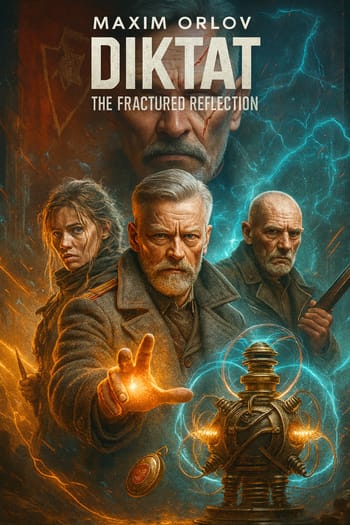
Sineus – Sineus is a man caught between two ghosts: the ghost of the nobleman he was born to be, and the ghost of the loyal Soviet commander he has tried to become. He is a man of contradictions, a skilled soldier who carries the weight of a fallen aristocracy. His service in the Red Army is an act of penance, an attempt to pay a debt to a world that destroyed his own. The discovery of the secret war and his own innate "Sensitive" abilities shatters his fragile peace. He is haunted by visions of the future and reflections that show a fractured self. He is a man who despises the work of a hunter but is forced to become one. His journey is a relentless search for the "hard right," a path to a redemption he no longer believes is possible, driven by a fierce loyalty to the few broken people he calls his own.
Zoya Koval – Zoya is not a soldier. She is a force of nature. A partisan whose home and family were erased by the war, she is a vessel of pure, incandescent rage. Her loyalty is not to a flag or an ideology, but to the soil and the ghosts of her dead. She fights with brutal instinct and a pair of worn knives, a wildfire in human form moving through the calculated world of spies and factions. She joins Sineus's group out of convenience, but her raw, impulsive violence becomes the team's emotional core. She is a constant, bloody reminder of the human cost of the factions' grand, abstract war. While others fight for the future or the past, Zoya fights for the present, for the simple, brutal act of revenge. She is the anger of the common people given a human face and a sharp blade.
Items, Weapons & Artefacts
The Broker's Ledger – This is not a book. It is an abacus of dark wood and beads of dull, black iron. It is Adem Kurtoglu's true accounting system. When a debt is made, the broker and the debtor touch the abacus. The memory of the promise—the terms, the price, the faces—is psychically absorbed into one of the iron beads, which turns a shade darker. The debt is not paid until Kurtoglu himself slides the bead back, releasing the memory. It is a simple, elegant system of obligation, far more binding than any paper contract. To default on a debt recorded in the Ledger is to have the memory of your promise sold to your worst enemy.
The Chronos Anomaly Detector – This Ahnenerbe artifact is not a weapon. It is a doomsday clock. A complex device of brass and crystal, it does not cut or alter memory. It measures the integrity of reality's script. Its needle, crawling across a complex dial, shows the density of the Whispering Plague and the accelerating rate of its growth. It is a tool that reveals the horrifying truth: the secret war is not just a risk, but the direct cause of an imminent, irreversible collapse. The Detector becomes a ticking clock for the team, its needle creeping toward a final, absolute zero point where the world itself will unravel. It is the story of the end of the world, told in the cold, impartial language of physics.
Demolition Charges – A standard tool for the partisan and the saboteur. A dense block of high explosive wrapped in waxed paper, smelling faintly of chemicals. It is a simple, brutal instrument for changing the landscape. For Zoya, it is a familiar weight in her hands, a tool of liberation learned in a village where everyone knew how to fight back. Four blocks can destroy a machine, but not a fortress. It is the weapon of the underdog, a way to make a loud, definitive statement. In a war of whispers and shadows, the honest, deafening roar of an explosion is its own kind of truth.
Memory Blade – A sliver of polished, non-reflective obsidian that seems to drink the light. It is the scalpel of the secret war, a tool used to surgically sever a memory from a person, a place, or even from reality itself. Its use is silent, but those with sensitivity can hear an intense, psychic buzz. It is the weapon of a new kind of monster, a tool that allows a man to commit a murder that leaves no physical wound. But it is a sloppy instrument. Every cut leaves behind a shimmering Memory-Wound in the fabric of the world and releases fragments that feed the Whispering Plague. It is a tool for cowards, for men who cannot face the consequences of the past.
The Sergeant's Locket – A simple, battered brass locket, dented and scratched from years of war. It was Boris Kulagin's anchor. Inside, there is no photograph of a wife or lover. There is only a small, folded piece of paper, a child's drawing in crude crayon of a lopsided house and a smiling yellow sun. It is the last remnant of a lost family, a memory of a peaceful world. For Sineus, it becomes the ultimate symbol of the stakes. It is not about flags or ideologies, but about the promise of that simple drawing. It is the memory of an innocence worth dying for, the one truth in a world of lies, and the reason to keep fighting when all hope is gone.
Sineus's Signet Ring – A heavy ring of blackened steel set with a polished obsidian stone. It is the last physical artifact of Sineus's noble lineage, a gift from his father. It is not just jewelry; it is a vessel, saturated with the memory of a fallen house, of honor and tragedy. For Sineus, it was the final, sacred link to his past. He traded it to a memory broker for an escape route, a sacrifice of his history for a chance at a future. Now, the ring and the story it contains are a commodity. The memory of his noble blood, his greatest secret and vulnerability, is in the hands of a man who sells to the highest bidder.
The Sokolov Cipher – The truth, etched onto fragile plates of quartz crystal. The Sokolov Cipher is not a single document, but a complex set of encrypted data. It contains the complete research of Dr. Viktor Sokolov: the mathematical proofs of the Whispering Plague's exponential growth, the technical specifications for the monstrous Oscillator, and the damning transcripts of General Volkov authorizing its use. It is the objective, undeniable proof of the Red Directorate's madness. It is a key that could expose the conspiracy and change the course of the war. It is also a death sentence for anyone who carries it. It is the ultimate prize, a weapon made of pure, unvarnished truth.
The Volkov Ring – A heavy signet ring of polished obsidian set in blackened steel. It was not an artifact of power, but a symbol of General Volkov's philosophy. The obsidian was forged in volcanic fire, the steel was from a cannon used in a brutal suppression—a memory Volkov personally erased. For him, the ring was a constant reminder that history was a material to be melted down and recast into a stronger form. It was the symbol of his will to power. After he was consumed by his own machine, the ring was the only thing that remained, a cold, dark piece of a man who thought he was a god, now just a curiosity on an enemy's desk.